
Upper Mustang Tiji Festival Trek 2026
Share with your friends
Trip Information

Duration
14 days

Max Altitude
Lo Manthang 3,840 M.

Difficulty
Moderate

Starts from
Kathmandu

Trips Ends at
Kathmandu

Activity
Trekking/Touring



Flying from Pokhara to Jomsom, with surreal views of the Dhaulagiri and Nilgiri ranges
Walking through Kagbeni’s medieval alleys and windswept chortens at the gateway to Upper Mustang
Climbing through red cliffs and narrow gorges from Tsele to Syangboche
Crossing Yamda La and Nyi La passes, with sweeping views of Mustang’s canyon maze and distant snow peaks
Descending to Ghami past eroded cliffs, barley fields, and one of Nepal’s longest mani walls
Traversing ochre hills and ancient cave dwellings en route to Tsarang
Crossing Lo La Pass and entering the walled city of Lo Manthang, surrounded by the Himalayan desert
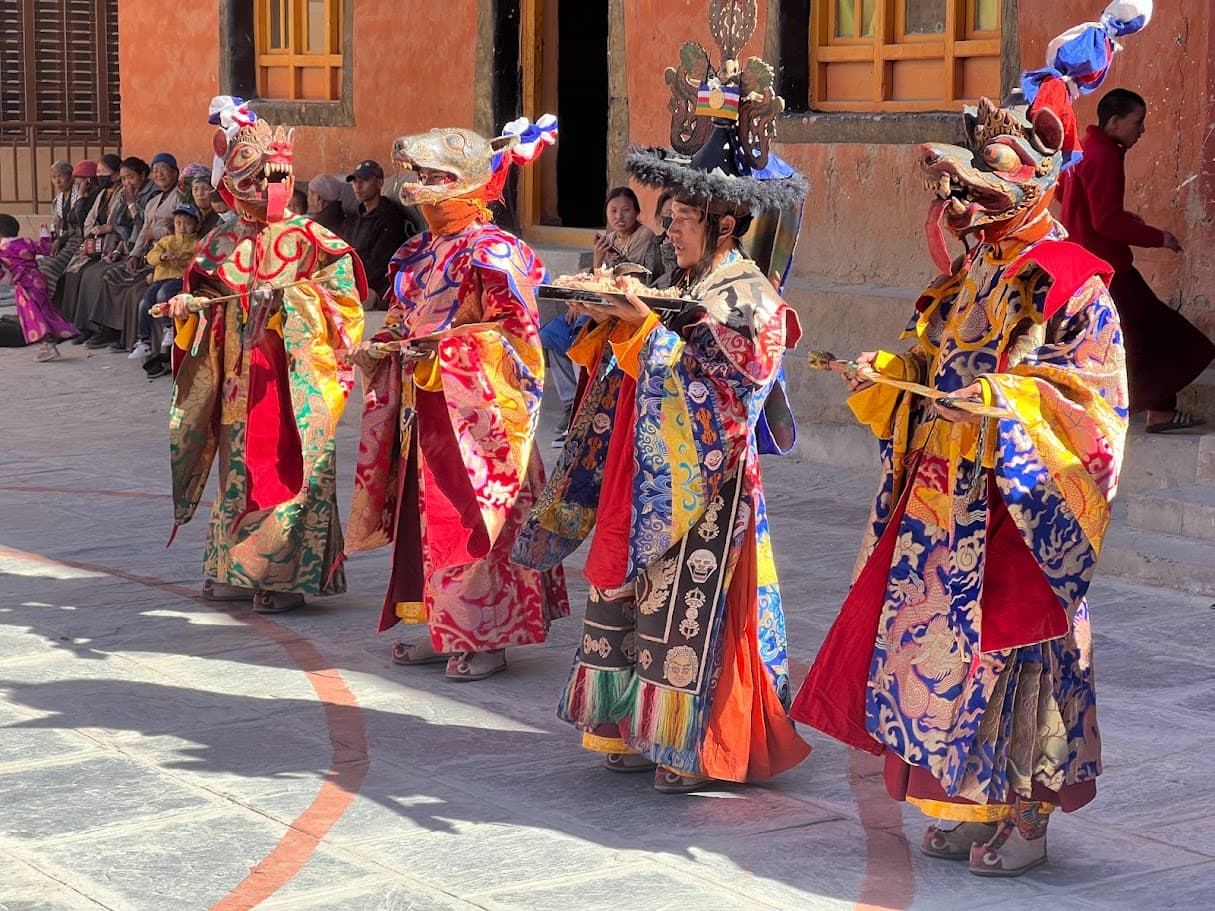
Witnessing the three-day Tiji Festival in Lo Manthang—masked dances, fire rituals, and the mythic battle of Dorje Shunu
Retracing the trail through Tsarang and Chungsi Cave, carved into the cliffside
Descending to Chhuksang through deep ravines and the Kali Gandaki’s braided riverbed
Driving back through Mustang’s canyon corridor, passing apple orchards and pine forests
Upper Mustang Tiji Festival Trek 2026 Overview
From the wind-sculpted cliffs of Upper Mustang to the sacred dances of Lo Manthang, the Tiji Festival Trek is a journey that seamlessly weaves together the beauty of the Himalayan desert with the living Tibetan culture. Over a period of 14 days, the route passes on ancient trade routes, medieval villages, high altitude passes, and canyon trails carved out by the Kali Gandaki.
The trek is timed to coincide with the Tiji Fest, which is vibrant in its colors. Trekkers witness masked rituals, fire ceremonies, and the symbolic victory of good over evil. Tucked in the Annapurna region, this restricted area needs permits and a guide, and rewards those who seek myth, silence, and sacred celebration.
Overview
The Tiji Festival Trek 2026 is a unique Himalayan trek that offers a combination of trekking in high altitude desert and deep cultural immersion. The 14-day itinerary winds through the restricted kingdom of Upper Mustang to end with the three-day Tiji Festival at Lo Manthang. Along the way, trekkers pass through Kagbeni, Tsele, Syangboche, and Tsarang through dry riverbeds, wind-carved cliffs, and high passes like Lo La and Nyi La.
Trekking takes 5 to 7 hours a day, up to 3,800 m above sea level. The ascent is moderate. The festival itself is a living myth: masked dances, fire rituals, and chants echo through Lo Manthang's ancient walls. It celebrates good triumphing over evil with the ancient Tibetan tradition.
Upper Mustang is a restricted area. One must have a RAP permit and a licensed Nepali guide. Package costs include flights, permits, guides, meals, and teahouse lodging.
This trek is a rare mystical blend of spiritual depth, cultural spectacle, and high altitude trekking in the desert, inviting all those who are attracted to the mythical, the quiet, and the eternal pulse of Himalayan ritual.
About the Tiji Festival in Upper Mustang
Tiji Festival is an ancient ritual held in the month of May in Lo Manthang, the ancient walled capital city of Upper Mustang. It originated with Tibetan Buddhist monks of the Chode Monastery in the 15th century to ward off bad spirits and bring harmony during the time of drought, disease, and unrest.
The festival turns Lo Manthang into a hallowed ground of masked dances, fire rituals, and spiritual storytelling. The three-day affair is a re-enactment of the myth of Dorje Shunu, a saint who fights a demon that threatens the water supply and peace of Mustang.
Dorje Shunu is the symbol of compassion and order, whereas the demon symbolizes chaos and suffering. The battle is depicted by cham dances that end with the symbolic destruction of demons and the purification of the land.
For people short on time or for those who do not prefer trekking, the alternative option to witness this festival would be via a jeep tour. To find out more, learn about the Tiji Festival Tour.
The 3 Days of the Upper Mustang Tiji Festival 2026
Tiji Festival is the most sacred festival of Upper Mustang held every year in Lo Manthang, in which people perform the masked dance, offer prayers, and purify the community. The exact dates change every year according to the Tibetan lunar calendar, and the period when the festival takes place is usually in May. The festival is set to happen on May 14, 15, and 16 of 2026. The exact dates are determined by Chhode Monastery in closer proximity to Spring.
Each day of the festival corresponds to a chapter in the myth of Dorje Jono, who fights against his demon father to save Mustang from drought and destruction. The ritual sequence proceeds in the following way:
Day: 1, Tsa Cham - Summoning and Cleansing
The festival begins with a ceremonial procession through the alleys of Lo Manthang. Monks of Chhode Monastery are dressed in layered silk robes and masks that symbolize the deities, demons, and protectors.
One giant thangka of Guru Rinpoche and Dorje Jono is spread out on the palace wall. This act is said to purify the valley from the spiritual impurities.
The major performance is the Tsa Chham, a masked dance that tells the story of the arrival of the demon Ma Tam Ru and the danger he poses to Mustang. The dance invokes divine energy to start purification.
The rich tones of dungchen (long horns) reverberate through the walled city, signaling the commencement of the sacred drama.
Day: 2, Nga Cham - Transformation and Battle Preparations
The second day is the spiritual essence of the festival. Monks enact the Nga Chham, a slow, deliberate dance showing Dorje Jono preparing to fight the demon.
The choreography is inspired by the creation of mandalas - cosmic diagrams representing harmony and order. Each gesture is a prayer for balance.
Local people gather with promises of butter lamps, incense, and barley. The dance represents the inner battle of light and darkness, and the community prays for peace and protection.
Day: 3, Rha Cham - Victory and Liberation
The last day marks the culmination of the festival. Monks dance to the Rha Chham, a powerful dance that climaxes when Dorje Jono kills Ma Tam Ru.
A demon effigy made of tsampa flour and colored cloth is thrown out of the city. The symbolism of this act is the expulsion of evil and the banishment of suffering.
At the end of the dance, monks circle the square while villagers toss roasted barley and shout. Prayers for the year to come are made regarding rain, fertility, and peace.
The festival concludes with shared meals, laughter, and a profound sense of renewal.
Dorje Shunu and the Tiji Festival Myth
Dorje Shunu (also known as Dorje Jono or Vajrakila) is the central deity of the festival. The whole story is about his mythical fight against the demon Ma Tam Ru Ta, who brought drought, disease, and chaos by polluting Mustang's water sources.
The story goes like this: Dorje Shunu, sent down by his divine father to restore the balance, descends to Earth and fights the demon in a series of symbolic battles. These are re-enacted through cham dances and masked dances performed by monks from Lo Manthang's Chode Monastery. Over the course of three days, the dances lead up to the defeat of the demon and its symbolic expulsion.
When we say "the festival itself is a living myth," what we mean is that the event is a ritual re-telling of this sacred story. It is not merely a performance, it is a communal cleansing and protective, and renewing act. Every gesture, every costume, every drum beat has centuries of spiritual meaning to it.
Dorje Shunu is a symbol of compassion, order, and divine intervention, and the demon (Ma Tam Ru) is a symbol of chaos, suffering, and imbalance.
Upper Mustang Tiji Festival Trek 2026 Departure Dates
The Upper Mustang Tiji Festival Trek 2026 is scheduled around the vibrant Tiji Festival, which will be celebrated from 14th to 16th May 2026 in the ancient walled city of Lo Manthang.
Arrival in Kathmandu: 087May 2026
Tiji Festival Celebration: 14–16 May 2026
Note: Private trips and customized itineraries are available upon request, allowing you to tailor the trek duration, route, and services to fit your preferences and schedule.
What Permits Are Needed for the Tiji Festival Trek in Upper Mustang?
Restricted Area Permit (RAP)
Mandatory for Upper Mustang, which is a restricted area from Kagbeni onwards.
Foreigners: USD 500 for the first 10 days + USD 50 per additional day
This Permit can be issued only by registered trekking agencies. Minimum of two trekkers required, as well as a licensed Nepali guide.
Annapurna Conservation Area Permit (ACAP)
It’s required to trek through the Annapurna Conservation Area, consisting of Jomsom, Kagbeni, and lower Mustang.
Foreigners: NPR 3,000/ USD 25 (changes may occur based on currency fluctuations)
This permit supports conservation & sustainable tourism in the region.
Trekkers’ Information Management System (TIMS) Card
Used for registration of trekkers and safety and tracking during the route.
Foreigners: NPR 2,000/USD 15 (changes may occur based on currency fluctuations)
Tiji Festival Trek 2026/2027
The Tiji Festival Trek 2026/2027 invites travelers to explore the mystical land of Upper Mustang while witnessing one of Tibet’s most sacred and colorful celebrations.
For 2026, the Tiji Festival is scheduled to take place from 14th to 16th May. This period offers the perfect opportunity to experience both the cultural heart of the Himalayas and the stunning trans-Himalayan landscapes of Mustang.
The Tiji Festival 2027 dates have not yet been finalized, as they depend on the Tibetan lunar calendar. However, the celebration is expected to occur sometime in May 2027, and the exact schedule will be updated once officially announced.
Customization and private trips are available for both years, allowing you to design a journey that aligns perfectly with your interests, pace, and travel style.
Best Time for the Tiji Festival Trek 2026
The best time to trek for the Tiji Festival is during May, when the festival is celebrated in the ancient kingdom of Lo Manthang, Upper Mustang. Spring offers the perfect combination of pleasant weather, clear skies, and dry trails, making it ideal for trekking in this high-altitude region.
The festival date varies each year according to the Tibetan lunar calendar, and local monasteries usually announce the confirmed schedule a few weeks in advance. In 2026, the festival is expected to take place from 14th to 16th May, although the exact dates are subject to final monastic confirmation.
Visiting during this time allows travelers to witness Lo Manthang coming alive with pilgrims, monks, and villagers preparing for the sacred dances and rituals. The atmosphere is vibrant and festive, and the surrounding landscapes are particularly scenic, with spring greenery and stable weather providing excellent trekking conditions.
Spring trekking during the Tiji Festival combines cultural immersion with ideal trekking conditions, making it the most recommended period to plan a visit.
Why Trek the Tiji Festival Route with Himalayan Trekkers?
We make visiting the Tiji Festival easy, safe, and deeply local. Based in Kathmandu, our team handles every detail so you can arrive in Lo Manthang calm, ready, and prepared to experience the full festival.
With two decades of work in Upper Mustang, we know the festival’s timing, village rhythms, and logistics that keep the trip smooth and respectful. Our itineraries include rehearsal days, all three festival days, and buffer time for weather or flight changes. All RAP, ACAP, TIMS, and local permits are arranged for you.
Licensed local guides explain the dances, costumes, and stories while keeping groups small for a quiet, authentic experience. Comfortable guesthouses near festival sites ensure convenience and close access. Safety and acclimatization are built in with health checks, first aid, and emergency oxygen.
We partner with trusted transport providers and solve any on-ground/flight issues quickly. Guests receive cultural briefings, and we follow eco-conscious and community-focused practices that benefit local people. Flexible options let you customize your journey, and our long record of successful Tiji trips and repeat guests shows the authenticity and care we bring every year.
Itinerary Detail
What is Included / Not Included
International airport transfers as per the itinerary
3 Star Standard Accommodation in Kathmandu and Pokhara on a twin sharing basis with breakfast
4WD Jeep transportation from Pokhara to Kagbeni and back to Pokhara from Chhuksang
Teahouse accommodation throughout the trek on a twin-sharing basis
All Meals during the trek
Annapurna Conservation Area Permit (ACAP) and TIMS card
Upper Mustang Restricted Area Permit (RAP)
Professional, government-licensed English-speaking trekking guide
Wages, food, drinks, accommodation, transportation, and insurance for the guide
Basic medical supplies (first aid kit)
All government and local taxes
During the Tiji Fest Trek, we provide comfortable and convenient accommodation throughout your journey. In Kathmandu and Pokhara, we offer 3-star standard hotels with clean, cozy rooms, private bathrooms, hot showers, and friendly service, ensuring a relaxing start and end to your trek.
On the trek in Upper Mustang, accommodation is in tea houses, which are simple and basic but clean and well-maintained. These family-run lodges offer hearty meals and warm hospitality, giving you a chance to experience local life up close. While facilities are modest, staying in these tea houses allows you to fully immerse yourself in the remote culture and stunning landscapes of Mustang.
This combination of city comfort and authentic trekking lodges ensures a memorable and enjoyable experience throughout your journey.
However, travelers can usually choose one of three ways to stay: luxury, standard, or budget-friendly. Each style has its own price, atmosphere, and amenities. We are happy to customize based on your interest.
Comfort and Luxury Options
Comfort and Luxury Options: In Kathmandu and Pokhara, one can book 3-star hotels and above. Jomsom also has a handful of high-end resorts, though they are not officially rated.
On the trail, there is a relative sense of luxury. Some lodges offer clean rooms, attentive service, and hearty meals, but are not as polished as city hotels. Prices differ depending on meals, drinks, and facilities. A high-end stay during the trek can cost over a thousand dollars.
Standard Accommodation
Many trekkers spend the first few days in luxury hotels in the cities and make the necessary switch to normal teahouses as soon as the trek begins. These teahouses are very basic but reliable and provide simple rooms and local meals.
Budget- Friendly Stays
For budget-conscious trekkers, there are hostels in the cities, and basic trail teahouses are the cheapest.
Rooms are simple - wooden bed frames with foam mattresses, communal pit toilets, and scarce amounts of hot water. Communal dining rooms are where you can try local delicacies like thukpa, dal bhat, and Tibetan bread. Blankets are provided, but bring your own sleeping bag for added warmth.
Note: A Single supplementary option is available throughout the trip for those who prefer a private room. This option can be arranged in Kathmandu, Pokhara, and larger tea houses along the trek at an additional cost, subject to availability.
Meals during the Tiji Festival Trek
During the trek, a variety of meal options are available to suit different tastes and preferences. Most tea houses and lodges serve Nepali, Indian, Tibetan, continental, and some Western-style dishes, ensuring that both local flavors and familiar meals are accessible to trekkers.
Vegetarian Meals
Vegetarian options are widely available throughout the trek. Typical dishes include dal bhat (lentil soup with rice), chapati, Tibetan bread, boiled potatoes, vegetable thukpa, tsampa porridge, and tea. These meals are hearty, nutritious, and a great way to experience traditional local flavors.
Non-Vegetarian Meals
Non-vegetarian dishes are mainly available in larger villages and towns. Popular options include egg curry, chicken momo, meat (especially in Lo Manthang or Tsarang), and omelets. In smaller villages, meat options may be limited, but eggs and dairy-based dishes are generally accessible.
Western Options
Some tea houses and lodges in larger towns also serve simple Western-style meals, such as omelets and egg curry. These options are less common in remote villages, where local cuisine dominates.
Drinks
A variety of hot and cold beverages are available along the route. These include tea, po cha (butter tea), coffee, ginger-lemon tea, soft drinks, and safe boiled water. Bottled water is sold in remote areas but can be expensive, so carrying a reusable water bottle (recommended 3L) is essential.
Meals on the trek provide a mix of traditional flavors, vegetarian options, and sufficient nourishment to keep trekkers energized throughout their journey.
(Note: If you have dietary restrictions (e.g. gluten-free, allergies, vegan), please inform your guide or agency in advance. Mustang’s remote terrain means food variety is limited, but basic needs can be met with proper planning.)
FAQ
Aurelie Fontaine
Tiji Festival in Lo Manthang: Sacred, Loud, and Utterly Transforming
Erik Jensen
Perfect Timing, Real Access, True Respect
Marta Nowak
A Festival That Opens the Heart
Kiran Patel
Accessible, Safe, and Spiritually Rich
Lina Gomez